Govt. to Mandate 100% Use of Eco-friendly Blocks in All Development Projects by 2025
The construction industry has long been a significant contributor to environmental degradation, with traditional building materials such as cement and concrete being major culprits in terms of carbon emissions and resource depletion. As the world increasingly turns its attention toward sustainability, the need for eco-friendly alternatives in construction has never been more urgent. One such solution is eco-friendly blocks, which promise to reduce the environmental footprint of buildings while offering a viable and cost-effective option for developers. These innovative blocks are made from sustainable materials and boast energy-efficient properties, making them a necessary shift toward greener and more responsible construction practices. By embracing eco-friendly blocks, we can pave the way for a future where urban development harmonizes with the planet’s well-being.
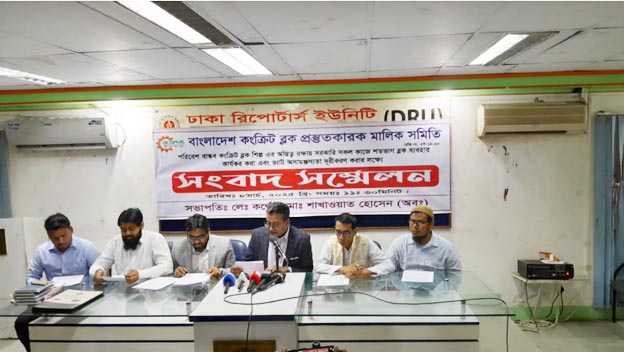
The Bangladesh Concrete Block Manufacturers’ Association (BCBMA) has raised concerns about the slow implementation of the government’s directive to use 100% eco-friendly concrete blocks in all government development and renovation works by 2025. This announcement was made by the Association’s president, Lt. Col. Shakhawat Hossain (Retd.), during a press conference held at the Sagar Runi Auditorium of Dhaka Reporters Unity.
Shakhawat emphasized that the adoption of environmentally friendly blocks is critical to safeguarding the nation’s agricultural lands and improving public health. These blocks serve as a sustainable alternative to traditional clay bricks, which are produced by burning coal or wood in brick kilns, contributing significantly to soil degradation and air pollution.
According to Shakhawat, Bangladesh’s agricultural sector is at risk due to the widespread use of clay bricks, with approximately 10,000 legal and illegal brick kilns across the country. These kilns destroy an estimated 3500 crore cubic feet of soil annually, threatening agricultural land and reducing crop yields. A study has shown that the loss in crop production amounts to about 2.3 million Taka per hectare, and the total crop loss for the country is a staggering 18.68 million Taka across 8.1 lakh hectares.
The president also pointed out that the burning of coal in these brick kilns reduces soil fertility, further exacerbating the country’s national food security and public health risks. He emphasized that the shift to eco-friendly blocks will not only protect agricultural lands but also contribute to a cleaner environment by reducing harmful air pollution.
In line with the government’s vision for a sustainable future, a notification was issued under Section 5(3A) of the Brick Manufacturing and Kiln Establishment (Control) Act, 2013 (Amended 2019). This directive mandates that eco-friendly blocks be used as an alternative to burnt clay bricks in all government construction and renovation works by 2025, with the target of reducing the use of clay bricks to zero. However, despite the notification, the implementation of this directive has faced significant hurdles.
Shakhawat lamented that even though the government had set a goal to use 100% blocks by the fiscal year 2024-25, the adoption rate has remained dismally low. “Even the 20% target has not been achieved, and many government agencies continue to use traditional bricks in their construction projects,” he said, pointing to the Public Works Department (PWD), the Local Government Engineering Department (LGED), and other engineering departments as key areas where progress has been slow.
One of the main barriers to the growth of the eco-friendly block industry, according to Shakhawat, is the unequal tax treatment between traditional clay bricks and eco-friendly blocks. He revealed that the VAT on eco-friendly blocks is significantly higher than on traditional bricks. While the VAT on a burnt clay brick is only 8 Taka, the VAT on eco-friendly blocks is 1.80 Taka, which is almost 23 times more. This discrepancy in tax policy has created a disincentive for brick kiln owners to invest in eco-friendly block production, as well as for new entrepreneurs to establish block factories.
In addition to the VAT issues, eco-friendly block manufacturers are also struggling with the high costs of production due to the imposition of duties on key equipment, such as pallets, which are essential for concrete block production. The high import duties on these materials increase the investment burden on block manufacturers, making it more difficult for them to remain competitive in the market.
Shakhawat called on the government to provide financial incentives and remove import duties on essential machinery for eco-friendly block factories. He urged the authorities to create a more favorable policy environment that would allow this sector to flourish and contribute to the country’s environmental sustainability goals.
Despite the challenges, Shakhawat expressed optimism that the government can still meet its targets for 2025 if proper initiatives are taken. He urged the relevant authorities, including the PWD, LGED, Education, and Health Engineering Departments, to prioritize the use of eco-friendly blocks in all development projects, as per the government’s directive.
He also demanded that the government declare the eco-friendly block industry tax and VAT-free for the next five years to stimulate growth in the sector and encourage investment in environmentally sustainable construction practices.
With the government aiming to reduce the use of burnt clay bricks entirely by 2025, it is crucial for all stakeholders to come together and ensure that the transition to eco-friendly blocks is both efficient and effective, safeguarding the nation’s agricultural lands and public health in the process.